Best Ecommerce Website Builders: Which One is Right for You?
Choosing the right ecommerce website builder for your online store is one of the most consequential decisions you will make for your business. The platform you pick determines what you can sell, how customers check out, which payment methods you accept, and how much your costs scale as your store grows. This guide covers five of the top options: Shopify, Squarespace, Elementor, Square Online, and SITE123, plus the 10 criteria you should evaluate before committing to any platform.
* read the rest of the post and open up an offer
Ecommerce Website Builder Comparison: At a Glance
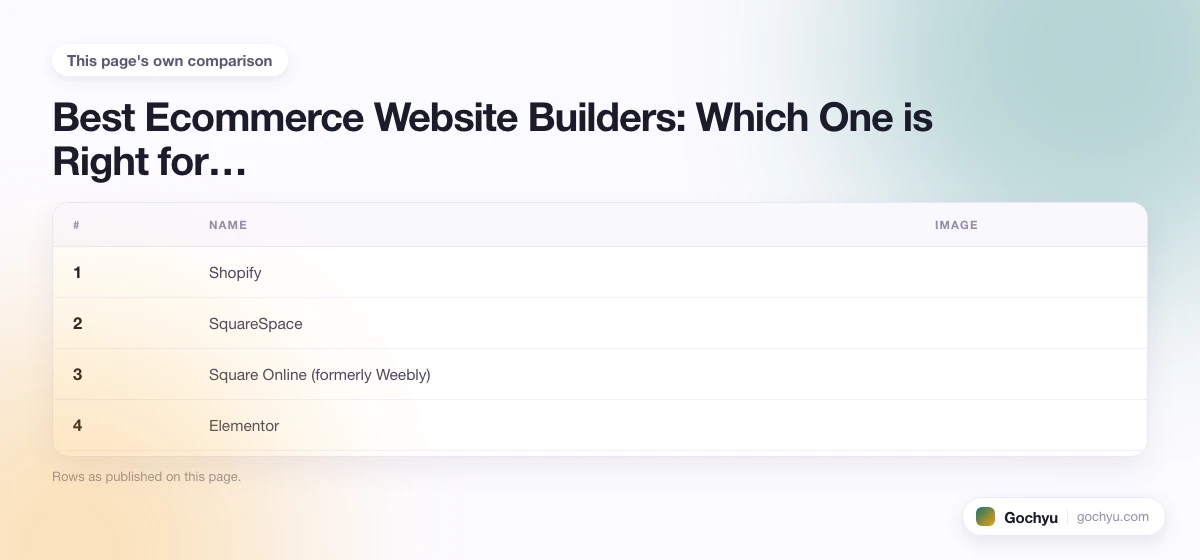
Before getting into each platform in detail, this comparison table shows how the most popular ecommerce website builders stack up on the factors that matter most:
| Platform | Best For | Starting Price | Transaction Fees | Standout Feature |
|---|---|---|---|---|
| Shopify | Scaling online stores | $29/month | 0.5%–2% (waived with Shopify Payments) | Purpose-built ecommerce with 8,000+ apps |
| Squarespace | Design-first small stores | $16/month (Basic Commerce $28) | 0% on Commerce plans | Award-winning templates, no transaction fees |
| Wix | Flexibility on a budget | $17/month | 0% | Drag-and-drop editor with 900+ templates |
| Square Online | Businesses with physical locations | Free (paid from $29/month) | 2.9% + 30c per transaction | Native POS sync for in-person and online sales |
| BigCommerce | High-volume retailers | $29/month | 0% | No transaction fees at any tier |
Pricing and fees reflect standard plans as of mid-2025 and can change. Always verify on each platform's pricing page before committing.
Shopify

Shopify: The E-Commerce Specialist
For those serious about selling online, Shopify is often the first name that comes to mind. Designed specifically for e-commerce, Shopify provides a full set of tools that make managing an online store both easy and efficient. With features like inventory management, integrated payment gateways, and automated shipping solutions, Shopify covers all the bases. Its extensive app store offers thousands of apps to extend your store's functionality, from marketing tools to customer service solutions. Whether you're just starting out or planning to scale, Shopify's customization options ensure your store looks unique and professional. If you're comparing it to the other major dedicated platform, our BigCommerce vs Shopify breakdown covers pricing, apps, and checkout performance side by side.
SquareSpace

Squarespace: The Design-First Choice
If visual appeal is your top priority, Squarespace stands out as the go-to for beautifully designed websites. Known for its elegant templates and design flexibility, Squarespace is a strong pick for artists, photographers, and creative professionals who want their online store to look polished. Beyond aesthetics, Squarespace provides a well-rounded set of e-commerce features, including product management, inventory tracking, and integrated marketing tools. With 24/7 customer support and mobile-responsive designs, Squarespace ensures that your store not only looks good but also performs well.
Square Online (formerly Weebly)
.jpg)
Square Online: The User-Friendly Choice
Square Online (previously known as Weebly before being acquired by Square) is well known for its user-friendly interface, making it a solid choice for beginners and small business owners. Its simple drag-and-drop builder requires no technical skills, allowing you to set up your online store with ease. Square Online integrates tightly with Square's point-of-sale system, a genuine advantage for businesses that sell both online and in person. Essential e-commerce tools including product management, order tracking, and marketing features are included at competitive pricing. If POS depth is your top priority, our BigCommerce POS review covers how it compares for businesses that sell primarily in person.
Elementor

Elementor: The Flexible Builder
Elementor, a powerful page builder that integrates with WordPress, offers unmatched flexibility and customization for e-commerce sites. Its drag-and-drop editor lets you design your site in real-time without any coding knowledge. Elementor's tight integration with WooCommerce makes it a strong choice for managing your e-commerce needs, giving you access to a wide range of design elements and templates. Performance optimization tools ensure your site loads quickly, while the large user community and extensive documentation provide plenty of support and inspiration.
Site123

SITE123: The Quick Setup
For those who need a quick, hassle-free setup, SITE123 is a practical option. This platform prides itself on its straightforward, guided setup process, allowing you to get your e-commerce site up and running in no time. While it offers basic e-commerce functionalities like product management and order processing, SITE123 is ideal for small businesses that don't require complex features. Its responsive design ensures your site looks great on any device, and 24/7 live chat support is available whenever needed.
How to Choose the Right Ecommerce Site Builder
Choosing the right ecommerce website builder depends on your specific business needs and goals. If you're focused on serious e-commerce, Shopify's full feature set and scalability make it the best choice. For a visually polished site, Squarespace's design-centric approach is hard to beat. Elementor offers deep customization for those comfortable with WordPress, while Square Online's ease of use and point-of-sale integration make it practical for hybrid businesses. If you need a simple, quick setup, SITE123 will get you online swiftly without any fuss.
Each platform has its strengths, so consider what's most important for your business: comprehensive e-commerce capabilities, design quality, flexibility, or simplicity. The right choice depends on your priorities today and where you expect to be in two to three years. For a comparison focused on smaller budgets and simpler needs, see our guide to the best website builders for small businesses. If you want pixel-level visual control and your store is small to mid-sized, Webflow is the design-led option worth knowing about, and our complete guide to Webflow covers features, pricing, and ecommerce limits in detail.
10 Things to Look For in an Ecommerce Web Builder
Before committing to a platform, evaluate it against these ten criteria:
- Ease of use: How quickly can you add products, update prices, and manage orders without technical expertise? A builder with a clear admin panel and logical navigation saves significant time at scale.
- E-commerce features: The platform must support product management, inventory tracking, payment processing, and order fulfillment as core functionality, not as expensive add-ons. If dropshipping is part of your model, see how BigCommerce handles dropshipping for its native fulfillment integrations.
- Customization options: Look for the ability to adjust templates, add custom code where needed, and reflect your brand in the design. The more control you have, the more your store can stand out. If you're drawing inspiration from competitors, our guide on how to find what theme a website is using can help reverse-engineer their setup.
- Payment gateway support: Verify that the platform accepts your preferred payment methods: credit cards, PayPal, Shop Pay, Apple Pay, and others. More options reduce checkout abandonment.
- Mobile responsiveness: Your store must work correctly on smartphones. More than half of e-commerce traffic arrives on mobile, and a broken mobile experience costs sales directly.
- SEO tools: Built-in meta title and description fields, clean URL structures, schema markup support, and image alt text are minimum requirements for organic visibility. Our BigCommerce SEO guide covers how one major platform approaches these requirements in practice.
- App and plugin support: Even a well-featured platform will have gaps. The ability to add marketing tools, live chat, loyalty programs, and analytics via integrations is essential for growth. For platforms that use AI to handle more of this setup automatically, see our AI website builders review.
- Security: SSL certificates, PCI-compliant payment processing, and regular security updates are non-negotiable for an e-commerce store handling customer payment data.
- Scalability: Consider how the platform handles increased product counts, traffic spikes, and international expansion. Migrating platforms later is expensive, so choose one that can grow with you. Our BigCommerce pricing breakdown shows how costs shift across tiers as volume grows, which is useful for projecting long-term platform expenses.
- Customer support: Check the quality of support before you need it. Live chat, email, and phone support during business hours is the minimum. 24/7 support matters more as your store scales.
Final Word
If you're not yet sure whether now is the right time, our guide on when to build a website covers timing and what to prioritize first. Once you're ready to commit, finding an available domain is the next step before you set up your store. If you're still weighing one builder against another, our walkthrough on how to choose the right ecommerce platform for your business goes through the six factors that should drive the call.
The best ecommerce website builder for your store depends on your priorities. Shopify wins on functionality and scalability for dedicated online retailers. Squarespace wins on design and simplicity for smaller stores where aesthetics matter, and our Squarespace vs Wix comparison walks through how it stacks up against Wix specifically for non-Shopify projects. Elementor wins on flexibility and cost for businesses already in the WordPress ecosystem. Square Online is the practical pick for businesses with physical locations. SITE123 suits straightforward setups that don't need advanced features.